Neuroplasticity 101: How Your Brain Changes at Any Age
Neuroplasticity lets your brain rewire, adapt, and grow at any age. Here's how it works and how to use it starting today.
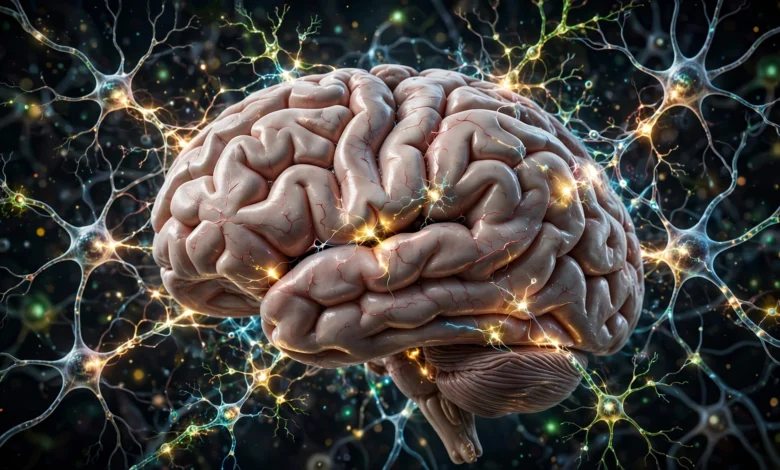
For most of the twentieth century, doctors told people the same thing: the adult brain is fixed. You get the neurons you’re born with, they slowly decline, and that’s the end of the story. Neuroplasticity research has since turned that idea on its head. Scientists now know the brain keeps rewiring itself in response to what you do, think, and experience, from childhood well into your eighties and beyond.
This matters for anyone who has ever wondered if it’s “too late” to learn a language, recover from a concussion, break a bad habit, or think more clearly after a stressful year. The honest answer, backed by decades of neuroscience, is no. Your brain is not a fixed piece of hardware. It’s closer to a living network that reshapes its own wiring based on the signals it receives, a process researchers call brain plasticity or neural plasticity.
In this guide, you’ll learn what neuroplasticity actually is, how it works at the cellular level, how it changes across different life stages, and what the research says about triggering it on purpose. You’ll also get a practical, no-nonsense list of habits that support neuroplasticity at any age, whether you’re 25 and want a sharper memory or 70 and recovering from a stroke. No gimmicks, just what the science actually supports.
What Is Neuroplasticity?
Neuroplasticity is the brain’s ability to change its structure and function in response to experience, learning, injury, or environment. The term comes from “neuro,” referring to neurons, and “plasticity,” meaning the capacity to be molded or shaped. Put simply, your brain physically changes based on what you repeatedly do, think, and pay attention to.
This isn’t a metaphor. When you practice a new skill, existing neurons form new connections with each other, strengthen the connections they already have, or, in some brain regions, new neurons are generated entirely. When you stop using a skill or a pathway, those same connections weaken over time. Neuroscientists sum this up with a well-known phrase: neurons that fire together, wire together, and neurons that stop firing together, drift apart.
This capacity for change is present in every human brain, though it looks different depending on age, health status, and how the brain is being challenged.
The Old Myth vs. the New Science
The “Fixed Brain” Idea
Until the late twentieth century, the dominant belief in neuroscience was that brain development stopped once a person reached adulthood. Once you finished growing, the thinking went, you were left with the neurons you had, and cognitive decline was simply inevitable as those neurons died off over the decades.


This belief shaped everything from stroke rehabilitation to how doctors talked to older patients about memory and learning. If the brain couldn’t change, there wasn’t much point in intensive retraining after a certain age.
What Changed the Scientific View
That view began to collapse in the 1960s and accelerated through the 1990s, sometimes called the “Decade of the Brain.” Landmark studies on adult primates showed that when sensory input changed, the brain physically reorganized its sensory maps, something that shouldn’t have been possible under the old model. A widely cited review of more than four decades of research on adult brain plasticity, published in the journal Behavioural Neurology, confirmed that factors including stress, hormones, learning, and environmental stimulation all measurably alter neuron structure and brain connectivity well into adulthood, according to a comprehensive review of adult neuroplasticity research.
Brain imaging technology made the case even stronger. MRI and fMRI studies let researchers watch structural changes happen in real time, in living human brains, in response to training, therapy, and skill practice. That evidence is why neuroplasticity is no longer a fringe theory. It’s the standard model of how brains work at every age.
How Neuroplasticity Works in the Brain
Neural plasticity happens through a few distinct biological mechanisms, and it helps to understand them separately.
Synaptic Plasticity
This is the most common and fastest-acting form of plasticity. Synapses are the tiny gaps where one neuron passes a signal to another. When two neurons repeatedly activate together, the synapse between them gets stronger and more efficient. This is the basis of most everyday learning, from memorizing a phone number to getting better at a video game.
Structural Plasticity
Structural plasticity involves physical changes to the brain’s architecture, not just the strength of existing connections. This includes:
- Growth of new dendrites, the branch-like extensions that receive signals from other neurons
- Formation of entirely new synaptic connections between neurons that weren’t previously linked
- Changes in the volume of gray matter in specific brain regions tied to a skill being practiced
- Pruning of unused connections to make the network more efficient
A frequently cited example is London taxi drivers, whose hippocampus (a brain region tied to spatial memory) was found to be measurably larger after years of memorizing the city’s complex street layout.
Neurogenesis
For a long time, scientists believed people were born with all the neurons they would ever have. That assumption has been revised. Certain brain regions, particularly the hippocampus, continue producing new neurons well into old age. Research highlighted by Mayo Clinic Press notes that although overall neuron count may decline somewhat with age, the brain retains the ability to generate new cells and rewire itself functionally throughout life, according to Mayo Clinic’s overview of neuroplasticity and aging.
Neuroplasticity Across the Lifespan
One of the biggest misconceptions about brain plasticity is that it only matters for kids. Age changes how plasticity shows up, but it doesn’t switch off.
Childhood: Peak Plasticity
Children’s brains are the most plastic of any life stage. This is why young kids can absorb a second language almost effortlessly, or recover remarkably well from certain types of brain injury that would be far more disabling in an adult. Critical periods, or windows of heightened sensitivity for specific skills like vision and language, are strongest in the first years of life.
Adulthood: Selective but Real
Adult brains are less globally plastic than a toddler’s, but they are far from static. Adults show strong plasticity in response to focused, repeated, and effortful practice. This is the mechanism behind adults learning new instruments, career changes that require entirely new skill sets, and cognitive-behavioral therapy reshaping thought patterns over months of practice.
Older Age: Slower, but Present
Aging does bring changes: some decline in synaptic density, gray matter volume, and processing speed. But researchers increasingly frame this as a shift in degree, not a disappearance of the capacity itself. A 2026 report from the American Psychological Association describes ongoing research into how structured learning programs help older adults build cognitive reserve, describing measurable gains in confidence and independence tied to neuroplasticity-based interventions, according to APA’s Monitor on Psychology coverage of aging and neuroplasticity. Aerobic exercise in particular has been shown to help preserve, and in some cases even increase, hippocampal volume in older adults, partially offsetting the natural age-related shrinkage of that region.
What Triggers Neuroplastic Change
Neuroplasticity isn’t something that happens passively while you sit still. It’s driven by specific inputs. The research points to a consistent set of triggers:
- Novelty — doing something the brain hasn’t encountered before forces new connections to form
- Repetition with effort — practicing a skill just past your current comfort level, not on autopilot
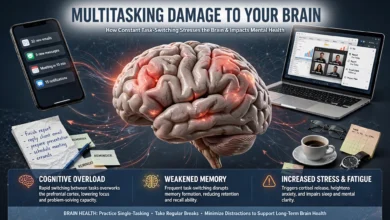
- Attention — plasticity is much stronger when you’re actively focused rather than distracted
- Physical movement — aerobic exercise increases blood flow and supports the growth of new neurons
- Sleep — memory consolidation and synaptic pruning largely happen during sleep
- Emotional engagement — experiences tied to stronger emotion tend to create stronger neural change, for better or worse
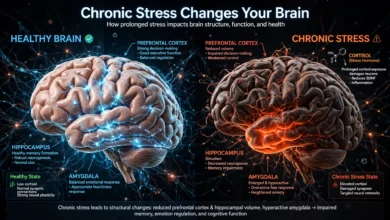
This last point cuts both ways. Plasticity isn’t automatically positive. Chronic stress, unmanaged trauma, and substance use can also reshape the brain, sometimes in ways that reinforce unhelpful patterns like anxiety loops or addiction. Neuroplasticity is the mechanism; the direction it takes depends on the input.
Practical Ways to Boost Neuroplasticity at Any Age
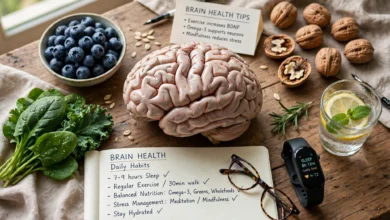
If you want to put neuroplasticity to work, here’s what the evidence actually supports, not vague wellness advice:
- Learn something genuinely new. A new language, instrument, or skill forces the brain to build fresh pathways rather than reinforcing existing ones. The learning curve is the whole point.
- Move your body regularly. Aerobic exercise, even brisk walking, is one of the most consistently supported ways to protect and grow brain structures tied to memory.
- Prioritize sleep. Skipping sleep undercuts the consolidation process that turns short-term learning into lasting change.
- Practice deliberately, not passively. Repeating a task you’ve already mastered offers little plasticity benefit. Growth happens at the edge of your current ability.
- Reduce chronic stress where you can. Sustained high cortisol levels are associated with shrinkage in brain regions tied to memory and mood regulation.
- Stay socially engaged. Conversation, group learning, and social problem-solving activate multiple brain networks at once.
- Challenge your senses and routines. Small changes, like using your non-dominant hand for simple tasks or varying your daily route, keep the brain from coasting on autopilot.
None of these require special equipment or a big time commitment. Consistency matters more than intensity.
Neuroplasticity and Recovery From Injury or Illness
One of the most meaningful applications of neuroplasticity is recovery. Stroke rehabilitation, for example, relies heavily on the brain’s ability to reroute function through undamaged regions when the original pathway is damaged. Intensive, repetitive physical and occupational therapy after a stroke isn’t just about strengthening muscles; it’s about coaxing the brain into rebuilding functional pathways.
A similar pattern shows up with post-viral smell and taste loss. Mayo Clinic Press reports that in an estimated 95% of people who experience these changes, the senses recover within a year, most effectively through structured smell training that repeatedly exposes the brain to specific scents to help it relearn the signal, according to the same Mayo Clinic Press analysis of neuroplasticity. This kind of targeted, repetitive retraining is a direct, practical use of brain plasticity outside of a lab setting.
Traumatic brain injury research adds an important caution here: plasticity can also work against recovery if the brain is left under-stimulated for long periods after an injury, sometimes referred to as negative plasticity. This reinforces the same theme found throughout the research: the brain adapts to whatever demands, or lack of demands, are placed on it.
Common Myths About Brain Plasticity
“You only have a fixed window to change your brain.”
False. Critical periods in early childhood are real and important, but adult and older-adult brains retain meaningful capacity for structural and functional change throughout life.
“Brain training apps will make you smarter overall.”
Not exactly. Most cognitive training improves performance on the specific task practiced, with more limited evidence for broad transfer to unrelated skills. Real-world, effortful learning tends to produce more durable change than repetitive app drills.
“Cognitive decline with age is unavoidable and irreversible.”
Some decline in processing speed is common with age, but it isn’t a fixed, one-way slide. Lifestyle factors like exercise, sleep, social engagement, and continued learning measurably influence how much decline occurs and how well the brain compensates for it.
“Neuroplasticity means you can rewire your brain instantly.”
Meaningful structural change takes weeks to months of consistent, effortful practice. Quick fixes and one-off exercises don’t produce the kind of lasting change most people are looking for.
Conclusion
Neuroplasticity is the reason your brain never fully stops adapting, whether you’re a five-year-old picking up a second language, a forty-year-old switching careers, or an eighty-year-old relearning how to walk after a stroke. The old idea of a fixed, declining adult brain has been replaced by a far more useful one: a brain that reorganizes itself, at the cellular and structural level, in response to what you consistently ask it to do.
That doesn’t mean change is instant or effortless. It takes deliberate practice, movement, sleep, and time. But the underlying capacity is there at every age, which means it’s never too late to start using it.