Signs of a Healthy Family Dynamic (And How to Build One)
A healthy family dynamic shows in how you talk, argue, and make up. Here are 8 clear signs to watch for and 7 practical ways to build one at home now.
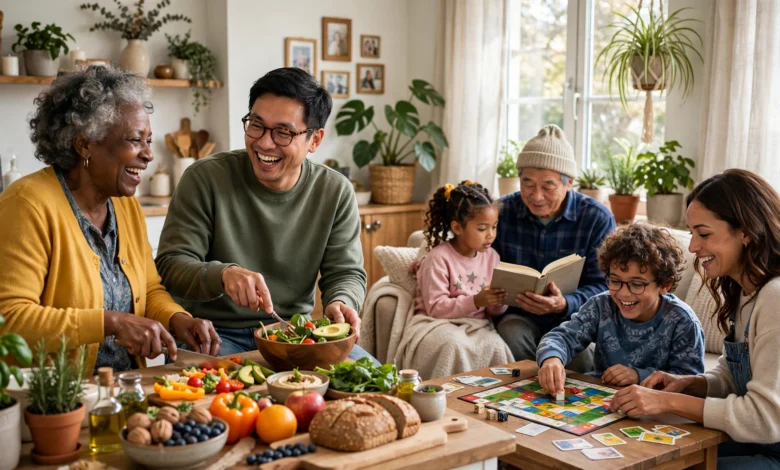
A healthy family dynamic does not mean a quiet house, matching schedules, or kids who never talk back. It means the people under one roof feel safe, heard, and free to be themselves, even on the days when everyone is tired and short on patience. Most of us never got a manual for this. We picked up habits from the homes we grew up in, kept the ones that worked, and repeated a few that did not.
That is normal, and it can be fixed. Family patterns are learned, which means they can change at any age. You do not need a big life overhaul or a perfect set of parenting rules. You need to know what a healthy family dynamic actually looks like, spot where your own home is already strong, and pick a few small habits to work on.
This guide covers eight clear signs of a healthy family dynamic, the warning signs that point the other way, and seven practical steps you can start using this week. We also look at how family dynamics shift as kids grow, what to do in blended families, and when it makes sense to bring in a therapist. Whether you are raising toddlers, living with teenagers, or trying to improve things with your adult siblings and parents, the goal is the same: a home where people can count on each other and still be themselves.
What Is a Healthy Family Dynamic?
A family dynamic is the pattern of how family members interact. It covers who talks and who listens, who makes decisions, how people handle disagreement, and how affection gets shown. Every family has one, whether anyone has named it or not. A healthy family dynamic is one where those patterns leave people feeling supported and secure, and where the patterns adjust as life changes.
Family researchers commonly name six ingredients: individuation, mutuality, flexibility, stability, clear communication, and role reciprocity, and they tend to put mutuality, the shared warmth that holds a family together, at the top. In plain language, that translates to this:
- Individuation: each person is allowed to be their own person.
- Mutuality: the family shares warmth and a sense of closeness.
- Flexibility: the family can adapt when life changes.
- Stability: home feels predictable and dependable.
- Clear communication: people say what they mean and are understood.
- Role reciprocity: responsibilities and support go both ways.
One point is worth saying early. A healthy family is not a perfect family. Siblings will bicker, parents will lose patience, and holidays will get tense. What separates a healthy family dynamic from an unhealthy one is not the absence of problems. It is how the family handles them, and whether people feel safe enough to try again afterward.
Why a Healthy Family Dynamic Matters
Home is the first place anyone learns how relationships work. Children absorb how to handle anger, how to ask for help, and how to trust by watching the adults around them. Those lessons travel into friendships, school, work, and later into their own families.


Adults benefit as well. A supportive home is a buffer against stress from money, work, and health. When a healthy family dynamic is in place, hard seasons feel more survivable because you are not carrying them alone. When it is missing, even small problems can feel heavy.
8 Signs of a Healthy Family Dynamic
No family shows all eight of these every day. Use this list as a map, not a report card. If you see most of them most of the time, your home is in good shape. If a few are missing, that is where to start.
1. Open and Honest Communication
In a healthy family dynamic, people say what they think and feel without fear of being mocked, punished, or ignored. This is the base that most other signs sit on. Family communication does not need to be constant or deep every day. It needs to be safe and two-way.
What it looks like in daily life:
- Family members ask each other real questions, not just “How was school?”
- People can say “I disagree” or “I’m upset” without the room going cold.
- Listening is shared. Parents listen to kids as much as kids are expected to listen to parents.
- Hard topics such as money, illness, or grief are talked about at a level each person can handle, instead of being hidden.
Here is a quick test. When someone in your house has bad news, who do they tell first, and how do they expect it to be received? If the honest answer is “nobody” or “I’d hide it,” that is useful information, not a verdict.
2. Mutual Respect and Healthy Boundaries
Respect goes in every direction in a healthy family dynamic. Adults respect children’s feelings, privacy, and growing independence. Children respect adults’ limits and needs. Siblings do not get to use each other as punching bags, physically or verbally.
Healthy boundaries are the visible edges of that respect. A teenager gets to close their bedroom door. A parent gets to say, “I need ten minutes before we talk about this.” A grandparent does not override a parent’s decision in front of the child. Boundaries are not walls. They are agreements about where one person’s space ends and another’s begins.
Signs that boundaries are working:
- People knock, ask, or check before borrowing, entering, or sharing someone’s personal information.
- “No” is an acceptable answer, and nobody gets punished for saying it.
- Adults do not lean on children for emotional support that belongs with other adults.
3. Emotional Safety and Trust
Emotional safety means people can be vulnerable at home without paying for it later. A child can admit they failed a test. A parent can say they made a mistake. A spouse can bring up a worry. None of them expects to see it used as ammunition in the next argument.
Trust in a healthy family dynamic builds through small, repeated proof. You do what you said you would do. You keep private things private. You show up when it counts. Trust is slow to build and quick to break, which is why consistency matters more than grand gestures.
Watch for these signs of safety:
- Family members share feelings, including messy ones like fear, jealousy, and shame.
- Mistakes lead to problem solving, not humiliation.
- People believe the others are on their side, even in the middle of a fight.
4. Fair and Flexible Family Roles
Every family runs on roles, spoken or not: the cook, the peacemaker, the planner, the breadwinner, the funny one. Roles are fine. Problems start when they become rigid or unfair. A ten-year-old who has to referee her parents’ arguments, or a mother who carries every household task while everyone else watches, is stuck in a role that does not fit.
In a healthy family dynamic, roles are shared, suited to each person’s age, and open to change. When a parent loses a job, gets sick, or a teenager starts driving, the roles shift and people talk about it. This ability to adjust is often called flexibility, and it helps families get through stress without breaking.
- Chores are divided by age and ability, not by gender or by who complains least.
- Nobody is stuck permanently as “the problem child” or “the responsible one.”
- Adults act as the adults, even when they are tired.
5. Consistent Rules and Fair Discipline
Kids and adults both do better when they know what to expect. In a healthy family dynamic, rules are clear, few in number, and applied in about the same way from one day to the next. Parents and caregivers back each other up instead of overruling each other in front of the children.
Fair discipline focuses on teaching rather than scaring. A consequence should connect to the behavior, be delivered calmly, and end when it is supposed to end. A week of silent treatment is not discipline.
Signs to look for:
- Rules can be explained in a sentence, and the reason behind them is shared.
- Consequences are predictable and proportionate.
- Rules change as children grow, so a 15-year-old is not held to a 7-year-old’s curfew.
- Praise is as regular as correction.
6. Conflict That Gets Repaired
Every family argues. Arguing is not the sign of trouble. What matters is whether the fight has some limits and whether it ends in repair. In a healthy home, people can be angry without being cruel. They avoid name-calling, threats, and the silent freeze-out. After the storm, someone says sorry, and the apology is accepted rather than thrown back later.
Repair can be simple: “I raised my voice earlier, and that wasn’t okay. Can we try again?” It works because it shows children that relationships survive disagreement. That single lesson may be the most valuable thing a healthy family dynamic teaches.
Good conflict resolution habits:
- Take a break when things get heated, then come back to it.
- Talk about the issue, not the person’s character.
- Apologize without adding “but.”
- Let go of the topic once it has been settled.
7. Regular Quality Time Together
Families who feel close usually spend time together on purpose. It does not have to be a big event. Shared meals, a weekend walk, a Friday movie night, cooking together, or a weekly call with relatives who live far away all count as family bonding.
The American Academy of Pediatrics has a practical note on this. On its HealthyChildren.org family meals page, the group says a family does not need daily dinners, because sitting down together just three times a week can still help, and the meals can be simple with everybody pitching in. A review of 17 studies covering nearly 183,000 children found that children who ate with their families at least three times a week were less likely to be overweight or to eat poorly.
Quality matters more than the count. Phones in another room, the TV off, and one person talking at a time will do more than a long, distracted dinner.
8. Room for Each Person to Be Themselves
Closeness without individuality turns into pressure. In a healthy family dynamic, members are supported in their own interests, opinions, friendships, and goals, even when those differ from what the parents expected. A child who loves art in a family of athletes, or a sister who moves to another city for work, is still fully part of the family.
This is what researchers mean by individuation, and it sits alongside closeness, not against it. A useful check: can each person in your family disagree, pursue something different, or want private space and still feel loved? If yes, you are in good shape.
Healthy vs. Unhealthy Family Dynamics: Key Differences
Sometimes it is easier to see what you have by looking at what you do not want. The table below shows how the same area of family life looks in a healthy home and in an unhealthy one.
| Area | Healthy family dynamic | Unhealthy family dynamic |
|---|---|---|
| Communication | Open, two-way, respectful | Passive, unclear, or full of yelling |
| Boundaries | Clear and respected | Blurred or ignored |
| Rules | Consistent and explained | Random or extreme |
| Roles | Shared and flexible | Rigid, or reversed, such as kids parenting adults |
| Conflict | Ends in repair | Ends in silence, grudges, or fear |
| Support | Given freely in both directions | Conditional or missing |
Family researchers describe several patterns that point to trouble. Here they are in everyday terms:
- Enmeshment: boundaries are so weak that people have no privacy or separate identity.
- Isolation: family members cannot rely on each other when they are hurt or struggling.
- Rigidity: rules never bend, no matter what the person in front of you needs.
- Disorganization: the home is chaotic, with little structure or routine.
- Unclear communication: messages are vague or contradictory, which leads to confusion and unfair blame.
- Role conflict: children act as parents, or one adult carries several roles because another has stepped back.
Seeing one or two of these in your own home does not mean your family is broken. It means you have found a place to start. Patterns like these are usually habits passed down over generations, not proof that anyone is a bad person.
How to Build a Healthy Family Dynamic: 7 Practical Steps
Building a healthy family dynamic is less about big talks and more about small habits repeated for months. Pick one or two steps below, try them for a few weeks, and add more when they feel natural.
Step 1: Start With Your Own Behavior
Children, and honestly most adults, copy what they see far more than they follow what they hear. If you want a healthy family dynamic, start by showing the behavior you hope to see. If you want a calmer home, show calm. If you want more honesty, admit your own mistakes first. You do not have to be perfect. You have to be visible about trying.
Step 2: Set a Weekly Family Check-In
Pick a 20 to 30 minute slot once a week. Sunday evening works for many families. Everyone answers three questions:
- What went well this week?
- What was hard?
- What do we need next week?
Keep it light, keep phones away, and end with something pleasant, like a snack. The point is to give feelings and logistics a regular place to land, so they do not leak out as arguments at 7 a.m.
Step 3: Create Simple Family Routines
Routines give a healthy family dynamic its steadiness. They also lower stress, because people do not have to negotiate every ordinary moment. Start small:
- A shared breakfast or dinner on most days
- A consistent bedtime routine for younger children
- One weekly tradition, such as a Saturday walk or pizza night
- A short goodbye and hello ritual for school and work days
Step 4: Learn to Listen Before You Fix
When a child or partner brings up a problem, the reflex is to solve it. Try asking, “Do you want help, or do you want me to listen?” first. Repeat back what you heard. Then ask what they think might help.
The Child Mind Institute, a national nonprofit focused on children’s mental health, has stressed that good communication between parents and kids can change the whole relationship. Child psychologist Wendy Mogel also suggests a tiny habit: tell your child “I thought of you today when…” and finish with a specific moment. It shows kids they are on your mind without quizzing them about their day.
Step 5: Agree on Family Rules Together
Rules that people help make are rules they follow more often. Sit down and write four to six household agreements, such as “We knock before entering,” “We speak kindly even when we’re upset,” and “Screens are off at dinner.” Let older kids weigh in on consequences. Review the list every few months, since a healthy family dynamic needs rules that grow with the people in it.
Step 6: Practice Repair After Conflict
Make repair a habit, not a special event. Teach a simple three-part apology to every member of the household, adults included:
- What I did
- How it affected you
- What I will do differently next time
Children who watch adults apologize sincerely learn that saying sorry is a strength. Just as important, the person who was hurt gets to respond honestly without being rushed to say “it’s okay.”
Step 7: Protect Time, Energy, and Support
A stressed family struggles to be a warm one. Look at what drains your household: overloaded schedules, money worries, constant screen time, poor sleep. Cut what you can, ask relatives or friends for help, and give the adults time to recharge. Looking after parents and caregivers is not selfish. It is part of the foundation of a healthy family dynamic.
How a Healthy Family Dynamic Changes at Each Stage
The signs of a healthy family dynamic stay the same, but the way they show up changes as people grow. Expect to adjust.
Young Children
Small children need routines, physical affection, simple rules, and adults who name feelings for them (“You look frustrated because the block tower fell”). Keep explanations short. Consistency matters more than perfect wording.
Teenagers
Teens need more say and more privacy. Expect pushback, since it is part of growing up. Keep a few firm rules about safety and respect, negotiate the rest, and pick moments to talk that do not feel like interrogations. Car rides and late-evening kitchen chats often work better than a formal sit-down.
Adult Children and Aging Parents
Roles change again. Adult children may start caring for parents, and parents may need to see their grown kids as equals. A healthy family dynamic at this stage depends on honest talk about money, care, and expectations, ideally before a crisis forces the conversation.
Blended Families
Give a blended family time. Trust builds slowly. Stepparents usually do better starting as a supportive adult rather than an instant disciplinarian. Protect one-on-one time between each parent and their own children, respect the traditions kids already have, and build new ones together at a pace everyone can accept.
When to Get Outside Help for Your Family Dynamic
Some situations need more than better habits. Consider a family therapist, counselor, or your doctor if:
- There is violence, threats, or abuse of any kind.
- Addiction or serious mental health problems are affecting daily life.
- A child’s mood or behavior has changed sharply.
- Grief, divorce, or another big loss has left the family stuck.
- You keep having the same fight with no progress.
Asking for help shows that you take your family seriously. Family therapy gives everyone a neutral space to be heard and a trained person to help spot patterns that are hard to see from the inside. If anyone is in immediate danger, contact local emergency services right away.
Frequently Asked Questions About a Healthy Family Dynamic
Can a family with a difficult past build a healthy family dynamic?
Yes. Patterns are learned, so they can be unlearned. Change usually starts with one person who decides to act differently and stays consistent. Progress is often slow and uneven, but small shifts in tone, listening, and repair add up.
How long does it take to improve family dynamics?
There is no fixed timeline. Many families notice small improvements within a few weeks of trying a new habit, like a weekly check-in. Deeper patterns, especially those with a long history, can take months or longer.
What if only one person is willing to change?
One person can still make a real difference. Changing how you respond, by staying calm, setting clear limits, and offering repair, often shifts how everyone else responds too. You cannot force others to change, but you can control your own part.
Is it unhealthy if my family argues a lot?
Not necessarily. Frequency matters less than how the arguments go. If people stay respectful, listen, and repair afterward, arguing can be a sign of honesty. If fights involve insults, threats, or fear, that is a different matter and worth addressing.
Conclusion
A healthy family dynamic is built from ordinary, repeated moments: honest conversations, respect for each person’s space, fair rules, shared meals, and apologies that actually get said. The eight signs covered here, from open communication and emotional safety to flexible roles and room for individuality, give you a clear picture of what to look for, while the seven steps give you a way to start improving things right away. No family gets this right every day, and none needs to.
What counts is that people feel safe, heard, and free to grow, and that they keep coming back to repair when things go wrong. Start with one habit, be patient with the process, and bring in professional support if you need it. Small changes made consistently can reshape a family over time.