Brain Health Tips: 9 Proven, Easy Ways to Keep Your Brain Young in Your 60s and 70s
Brain health tips for your 60s and 70s: exercise, diet, sleep, friendships, and health checks that protect memory and keep thinking sharp for decades.
Brain health matters more with every birthday, and most people in their 60s and 70s already know it. You walk into a room and forget why you went there. A familiar name stays stuck on the tip of your tongue for an hour. It is natural to wonder whether that is ordinary aging or the first sign of something more serious. Here is the reassuring part: cognitive decline is common, but it is not a fixed path. Large studies now show that daily habits can change how your brain health holds up over time, and it is rarely too late to start.
The strongest evidence so far comes from the U.S. POINTER trial. Older adults who spent two years on an intensive lifestyle program improved their mental abilities and appeared to slow the usual declines of aging. A major international review also estimates that around 45% of dementia cases are potentially preventable by addressing 14 modifiable risk factors, from high blood pressure to untreated hearing loss.
This guide covers nine practical ways to keep your brain young and protect brain health, written for real life rather than a research lab. You will see what to do, how much is enough, and where family and friendships fit in, because the people around you turn out to be one of the most powerful tools you have. Nothing here needs special equipment or a big budget. Pick two or three ideas, start this week, and build from there.
How Brain Health Changes After 60
Every brain changes with age. The brain slowly loses some volume during the 30s and 40s, and more so after 60. Word retrieval can take longer, and juggling several tasks at once feels harder than it used to. These shifts are normal. They are also not the whole story, because brain scans of some 70-year-olds resemble those of people in their 20s and 30s. Age alone does not decide your brain health.
What separates one person from another is often lifestyle and health management, not luck. Researchers writing in The Lancet Commission on dementia prevention estimate that about 45% of dementia cases could be prevented or delayed by addressing 14 modifiable risk factors over a lifetime. That number is a theoretical ceiling, and nobody can remove every risk. Still, it makes a clear point: a large share of your dementia risk is within your influence, and good brain health is built through ordinary choices repeated over years.
Normal Aging Versus Signs Worth Checking
It helps to know where the line sits.
Usually normal:

- Misplacing your keys or glasses, then retracing your steps to find them
- Forgetting a name and remembering it later in the day
- Needing extra time to learn a new phone or app
Worth mentioning to a doctor:
- Getting lost on a route you have driven for years
- Repeating the same question within minutes
- Struggling with bills, recipes, or hobbies that used to be easy
- Mood or personality changes that family members notice
If the second list sounds familiar, jump to the section on when to see a doctor.
Tip 1: Exercise Regularly for Better Brain Health
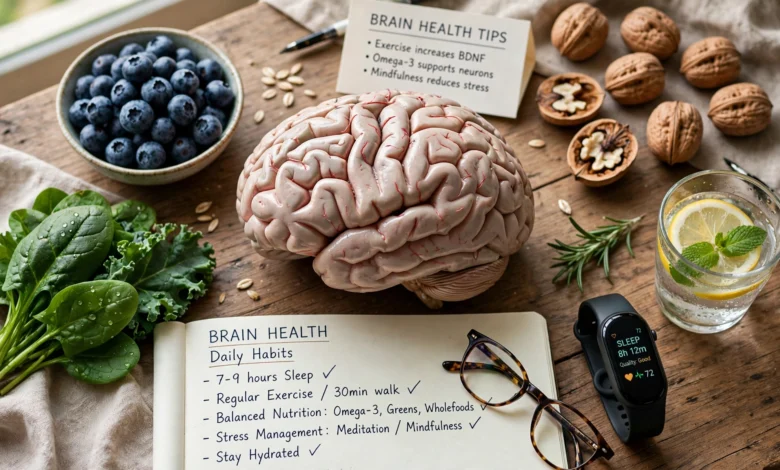
Of all the habits linked to brain health, exercise has the most consistent support. If you change only one thing, make it this one. Movement supports brain health in several ways. Exercise raises a protein called BDNF, which is vital for growing and keeping neurons, and it helps prevent brain inflammation. It also lowers blood pressure, improves cholesterol, helps balance blood sugar, and reduces mental stress, all of which help your brain as well as your heart.
How Much Exercise Is Enough for Brain Health
Experts quoted by TIME suggest 150 minutes of aerobic activity a week plus one to two days of strength training. Mayo Clinic Health System suggests 30 to 60 minutes several times a week. A simple mix looks like this:
- Aerobic: brisk walking, cycling, swimming, or water aerobics, enough to raise your heart rate and still hold a conversation
- Strength: resistance bands, light weights, or body-weight moves such as chair stands, twice a week
- Balance: tai chi, yoga, or standing on one foot while you brush your teeth, which also lowers your chance of a fall
Make Movement Social and Mentally Busy
Exercise does more for brain health when it asks your brain to do something too. Dancing, for example, combines a cardio workout with music, socializing, and remembering the steps, and yoga pairs meditation with movement. Exercise pays off for brain health at any fitness level. If you have heart disease, joint problems, or you have been inactive for years, check with your doctor and start with ten-minute walks.
Tip 2: Eat a Mediterranean-Style Diet for Brain Health
The POINTER program included a heart-healthy Mediterranean diet, and this pattern has some of the best evidence behind it for brain health. You do not need strict rules. Think of it as a direction to move in rather than a diet to pass or fail. Everyday food choices are among the easiest ways to look after brain health.
Foods That Support Brain Health
- Leafy greens and colorful vegetables at most meals
- Berries, which are easy to add to oatmeal or yogurt
- Beans, lentils, and chickpeas
- Whole grains such as oats, barley, and brown rice
- Fish such as salmon or sardines about twice a week
- Olive oil as your main cooking fat, and a small handful of nuts most days
Foods to Cut Back On for Brain Health
- Processed meats such as bacon and deli slices
- Sugary drinks and sweets
- Fried and heavily packaged foods
Small swaps are easier to keep than big overhauls, and they add up for brain health. Try fruit instead of a pastry, beans instead of a meat portion twice a week, or olive oil instead of butter on bread. Be careful with supplements marketed for memory. Most have not held up well in good trials, so talk with your doctor before spending money on them.
Tip 3: Keep Learning to Build Cognitive Reserve and Brain Health
Lifelong learning is one of the most enjoyable ways to invest in brain health. Brainy activities stimulate new connections between nerve cells, building neurological plasticity and a functional reserve that acts as a hedge against future cell loss. Reading, taking classes, learning a language or instrument, keeping a journal, and meaningful conversations all count as cognitive exercise. The Harvard Health guide to keeping your brain young makes the same case.
The key is challenge. A crossword you have solved every morning for 20 years is comfortable, which is nice, but it does not stretch you much. Aim for something that feels a little awkward at first:
- Sign up for a language class or find a conversation partner
- Pick up an instrument you always wanted to play
- Try painting, pottery, or woodworking, which train your hands and mind together
- Write a memoir or family history
Consistency matters more than intensity when it comes to brain health. If you are looking for ways to keep your brain young, new skills paired with other people are hard to beat for brain health.
Tip 4: Protect Sleep for Long-Term Brain Health
Sleep is one of the most overlooked parts of brain health. There is a persistent myth that older adults need less sleep. They do not. One study found that adults in their 50s and 60s who slept six hours or less a night were 30 percent more likely to be diagnosed with dementia than those who slept at least seven hours. Sleep is when the brain sorts memories and clears waste, so short or broken sleep costs you. Protecting sleep is protecting brain health.
Sleep Habits That Help Brain Health
Simple routines can improve sleep at any age:
- Keep the same bedtime and wake-up time, even on weekends
- Stop eating and drinking about three hours before bed
- Keep phones, tablets, and television out of the bedroom
If you snore loudly, wake up gasping, or feel exhausted after a full night in bed, ask your doctor about sleep apnea. It is common, it is treatable, and treating it can make a real difference to your thinking.
Tip 5: Strengthen Family Ties and Friendships to Keep Your Brain Young
This is the tip most people underrate, yet social connection is a proven pillar of brain health. Sarah Lenz Lock, who leads AARP’s Global Council on Brain Health, says social isolation increases dementia risk by 50% in older adults, and a few close friends can be enough. You do not need a crowd.
Part of the reason is simple. A conversation requires you to listen, process information, remember context, and respond appropriately, all of which keep the brain active. That is a full workout for the brain, and it happens without a workbook. A Stanford Medicine feature on healthy aging in your 60s and 70s even suggests that staying socially connected may matter more than doing puzzles. The POINTER program reflected this too, because it included mandatory social activity.
Family Habits That Support Brain Health
- Set a standing weekly call or video chat with children and grandchildren
- Cook a family recipe together and tell the stories behind it
- Teach a grandchild a skill, and let them teach you one in return, such as a phone feature or a game
- Record an oral history of your family with a relative or a young person
- Plan regular family meals, even if only once a month
Friendships and Brain Health
- Join a walking group, book club, choir, or faith community
- Volunteer somewhere that puts you in contact with people, such as a library, school, or food pantry
- Reach out first when a friend goes quiet, because many people your age are waiting for someone else to call
- Say yes to invitations, especially on days you would rather stay in
If Family Lives Far Away
Schedule calls at the same time each week so they become a habit. Play an online word game with a grandchild, or send letters and photos. Local senior centers and community classes fill the gaps and often lead to lasting friendships.
Do It Together as a Couple or a Family
Habits stick when someone shares them. Walk with your spouse after dinner. Cook the Mediterranean meals together. If you are an adult child, gently encourage a parent to book that hearing test or blood pressure check, and offer to go along. Brain health is a family project more often than people realize.
Tip 6: Manage Blood Pressure, Cholesterol, and Blood Sugar for Brain Health
What is good for your heart is good for your brain health, because the brain depends on healthy blood vessels. The Lancet Commission’s list of risk factors includes hypertension, obesity, and diabetes, and its 2024 update added high LDL cholesterol. High midlife LDL cholesterol was estimated to contribute 7% of potential dementia cases, and untreated vision loss 2%.
Here is what to do:
- Get your blood pressure, cholesterol, and blood sugar checked at least once a year
- Ask your doctor what your personal targets should be
- Take prescribed medication as directed, and do not stop because you feel fine
- Work toward a healthy weight through food and movement rather than crash diets
These conditions often have no symptoms, which is why regular checks matter so much. They are a quiet but powerful way to look after long-term brain health.
Tip 7: Treat Hearing and Vision Loss Early to Protect Brain Health
Many people brush off hearing and vision changes as a normal part of aging. The research says they deserve attention, because sensory health and brain health are closely linked. Studies have found that with every 10-decibel drop in hearing ability, dementia risk is 4 to 24% higher. An analysis of four studies also found that people with hearing loss who used hearing aids had a significantly lower risk of cognitive decline and dementia. The Lancet Commission also added untreated vision loss as a risk factor in 2024.
There are a few reasons this matters. A brain that strains to hear or see has less capacity left for memory and thinking. Poor hearing also leads people to withdraw from conversations, which brings back the isolation problem from Tip 5. Treating both is a low-cost way to support brain health.
- Book a hearing test if you often ask people to repeat themselves
- Have a full eye exam every year or two, and sooner if your vision changes
- Wear your hearing aids and glasses consistently, not just for special occasions
Tip 8: Manage Stress and Mood for Better Brain Health
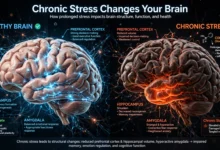
Emotional well-being is tightly tied to brain health. Depression is one of the 14 risk factors on the Lancet list, and long stretches of stress and low mood can also make memory and focus feel worse. Later life brings real losses, including retirement, the death of friends, or the loss of a spouse. Feeling sad after those events is human. Feeling flat or hopeless for weeks is a reason to get help.
Practical steps for healthy aging and steadier mood:
- Build a daily routine with something to look forward to
- Try breathing exercises, meditation, or yoga
- Talk to a counselor or your doctor if low mood lingers
Depression can look a lot like memory trouble, so treating it can sometimes clear up thinking problems that seemed like something else. Steadier mood and lower stress protect brain health in their own right.
Tip 9: Limit Alcohol, Tobacco, and Head Injuries to Protect Brain Health
Three more items from the Lancet list are within your control, and each one affects brain health.
Alcohol. The Commission defines excessive drinking as more than 21 UK units, equivalent to more than 12 US units. Older adults also tend to feel alcohol’s effects more strongly, so less is usually better, and cutting back is a direct gift to brain health.
Smoking. It is never too late to quit. Ask your doctor about medication and support programs, which improve your odds compared with going it alone.
Head injuries. Falls are a leading cause of brain injury in older adults, and head injuries are a preventable threat to brain health. Remove loose rugs, add lighting on stairs and in hallways, install grab bars in the bathroom, and wear a helmet when you cycle. Balance exercise from Tip 1 helps here too.
A Simple Weekly Plan to Support Brain Health
Nine tips can feel like a lot. Here is one way to turn them into a weekly routine that protects brain health:
- Walk briskly for 30 minutes on five days
- Do strength moves on two days
- Eat fish twice and include vegetables at every meal
- Spend 90 minutes on a new skill, split into three sessions
- Make two social plans and one call with family
- Keep a fixed bedtime and wake-up time
- Once a year, book the checks that protect brain health: blood pressure, cholesterol, blood sugar, hearing, and vision
Do not try to start everything at once. Add one habit a month. After six months you will have a routine that supports brain health without feeling like a second job.
What the POINTER Trial Means for Your Brain Health
The study followed more than 2,100 sedentary people in their 60s and 70s who had normal thinking but were at higher risk of decline. Half were asked to come up with their own plan to eat better and exercise more, while the other half entered a structured program with aerobic exercise four times a week, a Mediterranean diet, online cognitive training, and mandatory social activity. You can read the full story in NPR’s report on the POINTER study.
After two years, the structured group scored like people one to two years younger than themselves, which suggests the usual pace of decline slowed.
There are limits. Everyone in the study had elevated risk, the program was intensive, and two years is not a lifetime. But the message for brain health is useful: a combination of habits, practiced regularly, moves the needle more than any single trick. Brain health responds best to a combination of habits.
When to See a Doctor About Brain Health and Memory
Talk to a doctor soon if you or someone close to you notices:
- Memory problems that disrupt daily life
- Difficulty finding words or following a conversation
- Confusion about time, place, or familiar people
- Trouble planning or handling money
- Sudden changes in mood, behavior, or personality
Many causes of memory trouble are treatable, including thyroid problems, vitamin B12 deficiency, medication side effects, sleep apnea, and depression. An early check gives you answers and more options, and it is part of good brain health care. If you are a family member, raise the topic kindly and offer to attend the appointment.
Frequently Asked Questions About Brain Health
What is the best habit for brain health?
Regular aerobic exercise has the most consistent support, but a combination of habits works better than any one alone. Movement, food, sleep, and social contact each add something different.
Can you really keep your brain young after 70?
Yes. The POINTER study included people ages 60 to 79, and lifestyle changes still improved brain health. Benefits vary from person to person, and nothing can promise to prevent dementia, but starting later beats never starting.
Do brain training apps improve brain health?
The evidence is mixed. Online cognitive training was one part of the POINTER program, but it sat alongside exercise, diet, and social activity. Real-life learning with other people is a safer bet than relying on an app alone.
How long before I notice brain health results?
Better sleep, energy, and mood can show up within weeks. Changes in memory and thinking are slower and harder to feel. POINTER looked at two years, so patience and consistency count.
Conclusion
To keep your brain young and protect brain health in your 60s and 70s, focus on habits with the best evidence: regular aerobic and strength exercise, a Mediterranean-style diet, new and challenging learning, seven or more hours of sleep, and strong ties with family and friends, while also managing blood pressure, cholesterol, blood sugar, hearing, vision, mood, alcohol, smoking, and fall risk.
No single step guarantees protection, and this article is general information rather than medical advice, so check with your doctor before major changes. Still, research such as the POINTER trial and the Lancet Commission report shows that everyday choices add up, and the best time to begin caring for your brain health is today, one small habit at a time.