Brain Health Supplements: 7 Proven Facts and Costly Mistakes
Which brain health supplements have solid evidence behind them, which waste your money, and how to buy wisely, based on trial data and expert reviews.
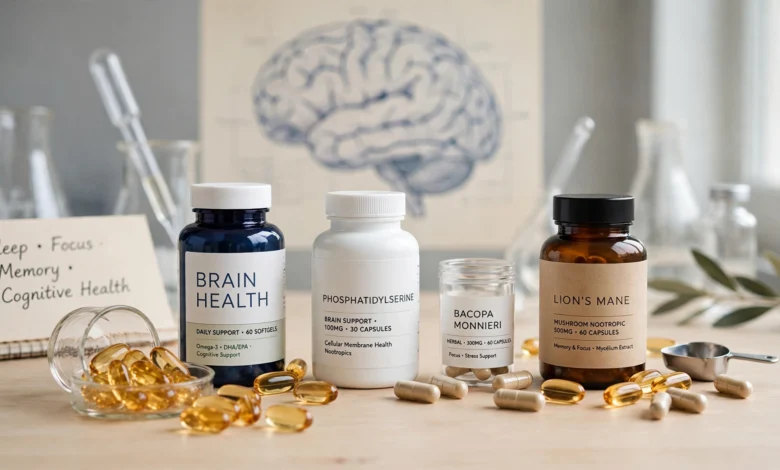
Brain health supplements are a big business, and it’s easy to see why. Roughly a quarter of American adults over 50 take one or more supplements to maintain or improve their brain health, and store shelves are packed with bottles promising sharper focus, better recall, and lower dementia risk. If you have ever stood in a pharmacy aisle trying to decide whether a $40 memory pill is worth it, you are in good company.
Here is the short version of what the research says. A few ingredients have decent evidence in specific situations. Many popular brain health supplements have been tested in large trials and came up empty. And at least one well-known product has been the subject of a federal court order over its memory claims. The gap between the marketing and the science is wide.
This guide goes through seven common ingredients one at a time and tells you what the best studies found. You will also see the most expensive mistakes people make when shopping, how brain health supplements are regulated, and the habits that have far better evidence than any capsule. I pulled from trial results, government health agencies, and independent expert panels rather than brand websites.
Nothing here replaces advice from your own doctor, especially if you take prescription medication. But if you want a straight answer on which brain health supplements are worth considering and which ones you can skip, keep reading.
Why Brain Health Supplements Are Everywhere Right Now
Fear of memory loss drives the market for brain health supplements. A 2019 AARP survey found that 26 percent of U.S. adults aged 50 and older take at least one supplement to maintain or improve their brain health, and sales of brain health supplements hit about $3 billion in 2016. Nobody wants to lose their independence, and brain supplements promise a way to protect it. A bottle on the shelf feels like a cheap, easy way to do something about it.
One member of an expert panel on the topic put it bluntly: people buying these products are buying hope, and they don’t always care about the evidence. That is not a criticism of shoppers. It is a description of how the marketing for brain health supplements works. Memory supplements sell a feeling of control over something that feels uncontrollable.
What the Label on Brain Health Supplements Actually Promises
Labels on brain health supplements lean on phrases like “supports healthy brain function” or “promotes mental alertness.” Now turn the bottle around. Small print usually says the FDA has not evaluated the statement and that the product is not meant to diagnose, prevent, or cure any disease. The FDA has also sent letters to some supplement companies telling them to tone down advertising that overstated benefits.
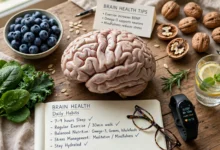
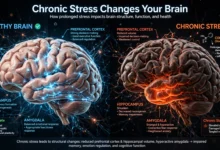
The word “supports” does a lot of work on those labels. It sounds like a health claim, but it is not the same as “prevents dementia” or “improves memory in older adults,” and no one has to prove it before the product goes on sale.
How Brain Health Supplements Are Regulated
In the United States, dietary supplements are not reviewed by the FDA for effectiveness before they reach the market. That means a company can sell brain health supplements without showing that they work, and a supplement for brain health can claim benefits that no one has verified. Quality also varies widely from one brand to the next, even among brain supplements sold side by side, so two bottles with the same ingredient name can contain different amounts.
When you shop for brain health supplements, that puts the burden of checking on you. Regulators do step in, but often years after a product has become popular, and usually after someone files a complaint.
Quality and Safety Problems Worth Knowing
Even brain supplements that sound harmless can cause trouble in the wrong situation:
- Drug interactions. Some supplements interact with medications, and labels don’t always warn you.
- Toxic doses. Taking too much of certain nutrients, including vitamin A and iron, can be harmful or even toxic.
- Inconsistent quality. Potency and purity can differ between brands, and there is no routine efficacy check.
- Combined products. Multi-ingredient formulas make it hard to tell what is doing what, and easy to double up on something you already take.
If you take blood thinners, heart medication, or anything for a chronic condition, ask a pharmacist before adding any of the brain health supplements below. The same goes for memory supplements sold as blends.
Seven Facts About the Most Popular Brain Health Supplements
Each fact below covers one ingredient found in brain health supplements. I have ordered them roughly from most encouraging to least, and I’ve noted the population studied, because a result in sleep-deprived adults doesn’t automatically apply to everyone else.
Fact 1: A Daily Multivitamin Has the Most Encouraging Trial Result
The best news among brain health supplements comes from a plain multivitamin. The COSMOS-Mind trial enrolled 2,262 adults with an average age of 73 and followed them for three years. Participants were randomly assigned to a multivitamin (Centrum Silver), a cocoa extract, both, or neither. The multivitamin group did modestly better on global cognition, and also showed benefits for memory and executive function. The researchers estimated that the multivitamin slowed cognitive aging by about 1.8 years over the three-year period, but they said the finding requires confirmation.
There are real caveats. The effect size was small. About 89 percent of participants were non-Hispanic White, so the result needs to be confirmed in more diverse groups. The same trial found that cocoa extract did not benefit cognition. And the authors themselves say more work is needed before anyone treats the multivitamin finding as settled.
Verdict: worth knowing about, and a reasonable choice if you already take a standard multivitamin. It is not a treatment for cognitive decline.
Fact 2: Creatine May Help Memory, Especially When the Brain Is Stressed
Creatine is best known in gyms, but it also plays a role in how cells produce energy, and brain cells use a lot of energy. A 2024 meta-analysis of 16 randomized trials with 492 adults aged 20 to 76 found that creatine improved memory, shortened attention time, and sped up processing. The catch is that overall cognition and executive function did not improve across the board, and the evidence quality was rated moderate for memory and lower for other domains.
Other reviews reach a similar conclusion. Creatine is one of the few brain health supplements with a believable mechanism, and there is some evidence it helps when the brain’s energy supply is challenged, such as during sleep deprivation, mental fatigue, or low oxygen. Results in healthy young adults remain inconsistent, while vegetarians and older adults seem more likely to benefit.
Verdict: promising but not settled among brain health supplements. Creatine monohydrate is the form with the most research. If you have kidney disease or take regular medication, check with your doctor first.
Fact 3: Correcting a Deficiency Is the Clearest Win
This is the one place where independent experts agree brain health supplements can matter. The Global Council on Brain Health, a panel convened by AARP, reviewed about 20 vitamins, minerals, and other nutrients and did not find sufficient evidence that taking any of them would boost brain health. But the council did conclude that when a health professional finds a nutritional deficiency, certain supplements might be warranted. A vitamin B12 deficiency or a folate deficiency can cause cognitive problems, and some people with conditions that limit nutrient absorption may need supplements too.
That distinction matters. The NIH’s National Center for Complementary and Integrative Health notes that short-term studies of B12, B6, and folic acid found no cognitive benefit for adults 50 and older, with or without dementia. In other words, B vitamins help people who are low, and they do little for people who are not.
Who tends to run low? Older adults, people who follow vegan or vegetarian diets, and people who take certain medications that reduce B12 absorption. A simple blood test tells you where you stand, and it costs far less than a shelf of bottles.
Verdict: helpful if you are deficient, and pointless if you are not.
Fact 4: Caffeine and L-Theanine Help Focus in the Short Term
The Global Council on Brain Health reviewed caffeine along with more than a dozen other ingredients, and it could not endorse any ingredient, product, or formulation designed for brain health. Still, among all brain health supplements and brain supplements, caffeine is the one ingredient most of us already use for mental performance, and there is a reasonable case for it on the day you take it.
Small trials of caffeine paired with L-theanine, an amino acid found in tea, suggest a modest lift in attention and a smoother feel than caffeine alone. It is not clear how much of the benefit comes from the theanine, and none of this shows any protection against dementia years down the road.
Verdict: fine for alertness, and cheap when it comes from coffee or tea. Don’t confuse a short-term focus boost with long-term brain protection.
Fact 5: Omega-3 Capsules Have Not Delivered
Fish oil is probably the most famous of all brain health supplements, and the story behind it is a good example of how a promising pattern can fall apart in trials. Among the nutritional factors studied to prevent cognitive decline, the most consistent positive findings are for omega-3 fatty acids, often measured as how much fish people ate. However, taking omega-3 supplements did not benefit the cognitive functioning of older people without dementia.
The numbers are large. A 2020 systematic review of 38 randomized trials with 49,757 participants concluded that omega-3 fatty acid supplements do not protect older adults from cognitive decline. A separate five-year NIH trial, part of the Age-Related Eye Disease Study, followed about 4,000 older adults and found that omega-3 supplements did not slow cognitive decline.
None of this makes fish a bad idea. Eating it regularly shows up in the better studies of brain health supplements and diet alike, and many dietary guidelines recommend it for heart health anyway.
Verdict: eat the fish, and save the money you would spend on omega-3 capsules and other brain health supplements for this purpose.
Fact 6: Ginkgo Biloba Failed Its Biggest Test
Ginkgo biloba is one of the oldest brain health supplements on the market and has been sold as a memory herb for decades. The NCCIH-funded Ginkgo Evaluation of Memory study gave 240 mg of ginkgo daily to more than 3,000 volunteers aged 75 and older and followed them for about six years. Ginkgo did not lower the incidence of dementia, including Alzheimer’s disease, and it did not slow cognitive decline.
Safety is a second issue. Ginkgo can cause headache, stomach upset, dizziness, and palpitations in some people, and it may interact with blood thinners. Raw or roasted ginkgo seeds and unprocessed leaves can be toxic.
Verdict: skip it. The evidence is not there, and the interaction risk is real.
Fact 7: Apoaequorin (Prevagen) Ran Into Legal Trouble
Prevagen is one of the best-known brain health supplements in American advertising. Its active ingredient, apoaequorin, is a protein originally isolated from jellyfish. The Federal Trade Commission and the New York Attorney General charged its marketers with making false and unsubstantiated claims. The complaint alleged the company relied on a study that failed to show the product worked better than a placebo on any measure of cognitive function. Prevagen cost up to $69 a bottle, and the company made $165 million in sales from 2007 to mid-2015.
A jury later found that the challenged claims lacked competent and reliable scientific support, though only two of the eight were judged materially misleading. In December 2024, an injunction forbade the company from claiming that Prevagen improves memory or cognition, shows results within 90 days, or is “clinically proven.” The judge denied the state’s request for financial penalties, and the company appealed. The Second Circuit heard arguments in February 2026, so check for a final ruling before you rely on any of this.
Scientists have also pointed out that apoaequorin has no known role in human memory and would likely be digested before reaching the brain.
Verdict: not supported by the evidence, and a poor use of money among brain health supplements.
Quick Verdict Table
Here is how the seven brain health supplements compare at a glance, in plain terms.
| Ingredient | What the evidence shows | Verdict |
|---|---|---|
| Multivitamin | Small cognitive benefit in a 3-year trial of adults 65+ | Encouraging, needs replication |
| Creatine | Memory gains in meta-analysis, mixed elsewhere | Promising |
| B12 and folate | Help only when you are deficient | Test first |
| Caffeine + L-theanine | Short-term attention gains | Fine for daily focus |
| Omega-3 capsules | No protection in large trials | Skip for cognition |
| Ginkgo biloba | No effect on dementia or decline | Skip |
| Apoaequorin | Claims barred by court injunction | Skip |
Costly Mistakes to Avoid With Brain Health Supplements
Most wasted money on brain health supplements comes from a handful of predictable errors. Here are the most common ones:
- Trusting “clinically shown” language on brain supplements. A single small study, or a subgroup analysis inside a failed study, can produce that phrase. Ask what the study measured and whether the product beat a placebo.
- Skipping the blood test. If you are low in B12 or vitamin D, fixing that is worth doing. If you are not low, extra will not sharpen your memory.
- Stacking products. Two or three bottles with overlapping ingredients can push you past safe limits for nutrients like vitamin A or iron.
- Ignoring medications. Ginkgo and blood thinners are the classic example, but they are not the only one.
- Paying extra for proprietary blends. When a label lumps ingredients together under one name, you can’t see how much of each you are getting.
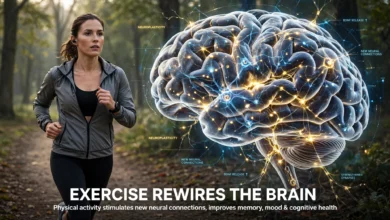
- Letting a pill replace the basics. Sleep, exercise, and social contact have better evidence than any capsule.
- Explaining away memory changes. If you or someone close to you notices real changes in memory, book an appointment. A supplement is not a diagnosis.
What Protects Your Brain Better Than Brain Health Supplements
The Global Council on Brain Health points to exercise, a healthy diet, plenty of sleep, challenging your thinking skills, and connecting with others as the ways to keep your brain healthy. Its executive director suggested that money spent on supplements would do more good spent on walking shoes or a salmon dinner than on any supplement for brain health.
Other health systems say the same thing about brain health supplements and lifestyle: nutrient-dense foods, learning new skills, playing music, and social activity all support cognitive function. They help with mood and energy as a bonus.
Here is a practical version you can start this week:
- Move most days. A brisk walk counts. Aim for something you will actually keep doing.
- Protect your sleep. Regular hours and a dark, cool room matter more than any sleep aid.
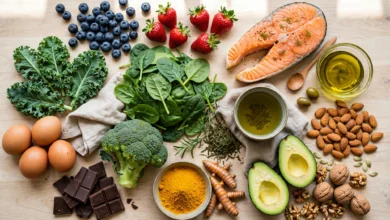
- Eat like the studies do. Fish, vegetables, fruit, whole grains, nuts, and olive oil show up in the good research.
- Keep learning. Pick up a language, an instrument, or a skill that is hard for you.
- Stay social. Regular contact with friends and family is linked to better cognitive health.
- Check your numbers. Blood pressure, blood sugar, hearing, and vision all affect the brain over time, and your doctor can track them.
How to Choose Brain Health Supplements Safely
If you still want to try brain health supplements, do it deliberately. This checklist keeps the risk and the cost low:
- Talk to a clinician or pharmacist first. Bring the exact product and dose.
- Get baseline labs. B12 and vitamin D are common starting points.
- Pick a single-ingredient product. You will know what you are taking and how much.
- Look for third-party testing. Seals from USP or NSF show that the contents match the label.
- Change one thing at a time. Give it a couple of months and note whether anything actually changes.
- Set a budget. If a product costs more than a week’s groceries, ask yourself what evidence justifies that.
- Stop if you get side effects. Headaches, stomach trouble, and dizziness are all reasons to call your doctor.
FAQs About Brain Health Supplements
Do brain health supplements really improve memory?
For most healthy people, the evidence says brain health supplements do not. The Global Council on Brain Health could not endorse any ingredient, product, or formulation designed for brain health, and NIH research summaries say there is no strong evidence that any complementary health approach can prevent cognitive impairment. The only exceptions among cognitive supplements are correcting a real deficiency and the early, promising results for a multivitamin and for creatine.
What is the best supplement for brain health?
There is no single best supplement for brain health, and no ingredient has earned that title. If a blood test shows low B12 or another nutrient, replacing it is the best supplement decision you can make. If you are healthy and eat well, your money is better spent on food, exercise, and sleep.
Are brain health supplements safe to take every day?
It depends on the ingredient, the dose, and your medications. Some brain health supplements are low risk, while others interact with drugs or become harmful at high doses. Ask your doctor or pharmacist before you start.
Conclusion
Brain health supplements are easy to buy and hard to evaluate, and the research shows why caution pays off: a daily multivitamin and creatine have some encouraging results, correcting a genuine deficiency such as low B12 is worthwhile, caffeine and L-theanine can help you focus today, and omega-3 capsules, ginkgo biloba, and apoaequorin have failed to show protection against memory loss in serious testing.
Because supplements are not reviewed for effectiveness before sale, you have to be your own skeptic: check the label claims, look for third-party testing, watch for drug interactions, and talk to your doctor before you start. The habits with the best track record are still exercise, good sleep, a nutritious diet, and staying mentally and socially active, so build those first and treat any of the brain health supplements as an optional extra rather than a plan.