15 Career Development Skills Every Professional Needs in 2026
Career development skills separate top performers from the rest in 2026 — from AI fluency to emotional intelligence and beyond.
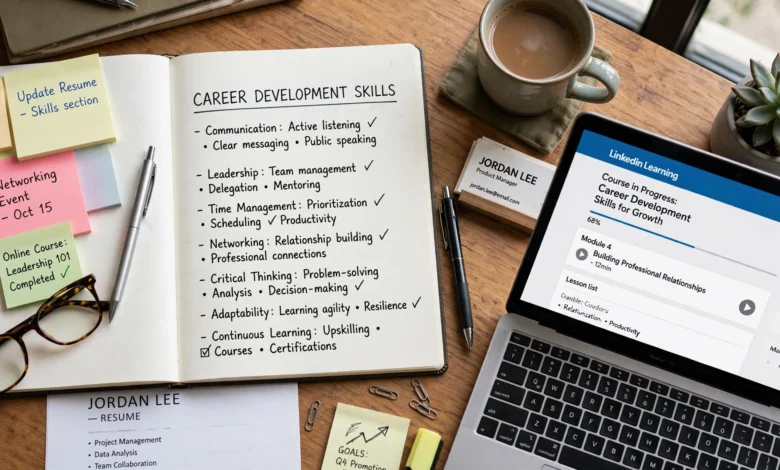
If you’ve felt like the rules of career growth changed overnight, you’re not imagining it. Career development skills that mattered five years ago aren’t enough anymore, and the professionals pulling ahead in 2026 are the ones who noticed the shift early and adjusted. This isn’t about chasing every new trend or collecting certificates for the sake of it. It’s about understanding which career development skills actually move the needle in a workplace that’s being reshaped by AI, hybrid teams, and a job market that rewards adaptability over tenure.
Employers today aren’t just hiring for what you know. They’re hiring for how well you learn, communicate, and work alongside both people and technology. That means the old formula of “get a degree, learn the software, wait for a promotion” doesn’t hold up the way it used to. The professionals thriving right now have built a mix of technical fluency and human skills that machines still can’t replicate.
In this guide, we’ll walk through 15 career development skills every professional needs in 2026, why each one matters, and practical ways to start building them. Whether you’re early in your career, aiming for a leadership role, or simply trying to stay relevant in a fast-moving industry, this list is meant to give you a clear, honest starting point rather than a vague list of buzzwords.
Why Career Development Skills Matter More in 2026
The workplace has changed faster in the last three years than in the previous decade. AI tools now handle tasks that used to take up entire workdays. Teams are spread across time zones. And companies are far more selective about who they invest in for long-term growth. This is exactly why professional development skills have become the deciding factor between people who get promoted and people who plateau.
According to research from the <a href=”https://www.weforum.org/publications/the-future-of-jobs-report-2025/” target=”_blank” rel=”noopener”>World Economic Forum</a>, employers increasingly rank analytical thinking, resilience, and technological literacy among the most important skills for the next several years, ahead of many traditional technical qualifications. That tells you something important: career development skills aren’t a side project anymore. They’re the main event.
The 15 Career Development Skills Every Professional Needs in 2026
Here’s the full breakdown of the career development skills worth prioritizing this year, along with what each one actually looks like in practice.
1. AI Literacy and Human-AI Collaboration
AI literacy has quickly become one of the most in-demand career development skills across every industry, not just tech. This doesn’t mean you need to code or build models. It means understanding what AI tools can and can’t do, how to prompt them effectively, and how to critically evaluate their output instead of accepting it blindly.


Professionals who treat AI as a collaborator rather than a threat are the ones getting more done in less time. Practical steps include:
- Learning to use AI tools relevant to your specific role, not just generic chatbots
- Practicing prompt writing to get more useful, accurate results
- Reviewing AI-generated work critically before using it
- Staying aware of where AI tends to make mistakes in your field
2. Critical Thinking and Problem-Solving
As routine tasks get automated, critical thinking becomes one of the clearest ways to stand out. Employers want people who can look at a messy situation, break it down, and figure out what actually needs to happen next.
This skill shows up in small daily decisions as much as big strategic ones. To sharpen it:
- Ask “why” more than once before accepting a surface-level explanation
- Practice separating facts from assumptions in reports or meetings
- Seek out problems that don’t have an obvious solution and work through them methodically
3. Emotional Intelligence
Emotional intelligence has moved from a “nice to have” to a genuine business requirement, especially as more teams manage a mix of human and AI-assisted work. Leaders and individual contributors alike need to read the room, manage their own reactions, and understand what motivates the people around them.
Building emotional intelligence means:
- Practicing active listening instead of waiting for your turn to speak
- Noticing your own emotional triggers before reacting in stressful situations
- Checking in with teammates rather than assuming everyone’s fine
4. Adaptability and Change Management
Change isn’t a once-a-year event anymore, it’s constant. Adaptability is what allows professionals to handle shifting priorities, new tools, and reorganizations without losing momentum or motivation.
You can build adaptability by:
- Volunteering for projects outside your comfort zone
- Treating unexpected changes as information rather than setbacks
- Reviewing what worked and what didn’t after a major shift, instead of just moving on
5. Communication Skills
Communication skills remain one of the most consistently ranked career development skills across nearly every industry survey, and for good reason. Being able to explain your thinking clearly, whether in writing, in a meeting, or in a quick Slack message, directly affects how much trust and responsibility you’re given.
Strong communicators tend to:
- Tailor their message to the audience instead of using one-size-fits-all explanations
- Ask clarifying questions before assuming they understand a request
- Keep written communication concise and action-oriented
6. Data Literacy
You don’t need to be a data scientist to benefit from data literacy. Most roles today involve interpreting some kind of dashboard, report, or metric, and professionals who can read that information accurately make better decisions faster.
Ways to build this skill include:
- Getting comfortable with basic spreadsheet functions and visualizations
- Asking what data is actually measuring before drawing conclusions from it
- Practicing explaining a data trend in plain language to a non-technical audience
7. Leadership Without Authority
Not everyone has a management title, but nearly everyone is expected to lead in some capacity, whether that’s guiding a project, mentoring a newer hire, or pushing an idea forward without formal power. This kind of leadership is increasingly one of the career development skills hiring managers look for when considering someone for promotion.
You can practice this by:
- Taking ownership of outcomes even when you’re not officially in charge
- Offering solutions instead of just flagging problems
- Building credibility through consistency rather than authority
8. Collaboration and Cross-Functional Teamwork
With more organizations relying on cross-functional projects, collaboration has become a core professional skill rather than a personality trait. Working well with people outside your immediate team, department, or area of expertise is now a baseline expectation.
Strong collaborators tend to:
- Understand the priorities and pressures of other teams before pushing their own agenda
- Communicate proactively instead of waiting to be asked for updates
- Give credit generously and take feedback without getting defensive
9. Time Management and Prioritization
With more tools, more notifications, and more competing demands than ever, time management is one of the most practical career development skills you can build. It’s less about squeezing more into your day and more about knowing what actually deserves your attention.
Useful habits include:
- Identifying your two or three most important tasks each day before checking email
- Batching similar tasks instead of constantly switching contexts
- Saying no, or at least “not right now,” to lower-priority requests
10. Digital Fluency
Digital fluency goes beyond knowing how to use basic office software. It’s about being comfortable learning new platforms quickly, understanding how different tools connect, and troubleshooting minor issues without needing IT for every small thing.
This matters because:
- New tools are introduced constantly, and slow adopters fall behind
- Digital fluency reduces dependency on others for routine tasks
- It signals to employers that you can handle change in how work gets done
11. Networking and Relationship Building
Genuine networking isn’t about collecting contacts, it’s about building real professional relationships that create opportunities over time. This remains one of the more underrated career development skills, even though most job opportunities still come through connections rather than cold applications.
To build stronger professional relationships:
- Reach out to people in your field without immediately asking for something
- Stay in touch with former colleagues instead of only reconnecting when you need help
- Attend industry events or online communities relevant to your field
12. Creativity and Innovation
Creativity isn’t reserved for designers or marketers. Every role benefits from people who can approach old problems in new ways, especially as routine work gets automated and organizations lean on human judgment for the harder, less predictable decisions.
You can nurture creativity by:
- Exposing yourself to ideas and industries outside your own
- Asking “what if we tried this differently” instead of defaulting to the usual approach
- Giving yourself space to think, rather than jumping straight to execution
13. Negotiation Skills
Negotiation skills apply far beyond salary discussions. They come into play when setting project deadlines, dividing responsibilities, or pushing back on unrealistic expectations. Professionals who negotiate well tend to get better outcomes without damaging relationships.
Practical negotiation habits include:
- Preparing your position with facts and clear reasoning ahead of time
- Listening for the other person’s actual priorities, not just their stated position
- Aiming for outcomes both sides can live with, rather than a pure win-lose result
14. Resilience and Stress Management
Burnout is a real risk in a work environment that moves this fast, which is why resilience belongs on any serious list of career development skills. This isn’t about pushing through exhaustion, it’s about building habits that help you recover and stay steady under pressure.
Ways to build resilience include:
- Setting boundaries around work hours, even when it’s tempting to always be “on”
- Reflecting on setbacks to extract lessons instead of just moving past them quickly
- Building a support system of colleagues, mentors, or friends you can talk to honestly
15. Lifelong Learning Mindset
Every skill on this list depends on one underlying habit: a genuine commitment to lifelong learning. The professionals who stay relevant year after year aren’t necessarily the smartest in the room, they’re the ones who keep learning after they’ve already succeeded.
According to <a href=”https://hbr.org/2023/12/the-real-value-of-continuous-learning” target=”_blank” rel=”noopener”>Harvard Business Review</a>, professionals who continuously invest in new skills are significantly more likely to advance into leadership roles and adapt successfully to industry disruption. Building this mindset means:
- Setting aside regular time for learning, even 20-30 minutes a few times a week
- Following industry news and trends instead of waiting for a formal training session
- Treating mistakes as data rather than failures
How to Build These Career Development Skills This Year
Trying to work on all 15 career development skills at once is a fast way to burn out and make progress on none of them. A more realistic approach:
- Pick two or three skills that would have the biggest impact on your current role or next career move.
- Set a specific, small goal for each, like practicing active listening in your next three meetings or completing one AI literacy course this month.
- Track your progress informally through a journal, a simple checklist, or regular check-ins with a mentor.
- Ask for feedback from colleagues or managers who can tell you honestly whether they’re seeing a change.
- Revisit your priorities every few months, since the skills that matter most can shift as your role or industry changes.
Common Mistakes to Avoid
A few patterns tend to slow people down when they’re trying to build career development skills:
- Treating soft skills as optional. Technical skills get you in the door, but skills like communication and emotional intelligence often decide who gets promoted.
- Learning passively. Watching a video or reading an article isn’t the same as practicing a skill in real situations.
- Ignoring feedback. It’s easy to assume you’re improving without actually checking in with the people who see your work regularly.
- Chasing every trend. Not every new skill or tool is worth your time. Focus on what’s genuinely relevant to your field and goals.
Conclusion
The professionals who move forward fastest in 2026 aren’t necessarily the most talented or the most credentialed, they’re the ones who took career development skills seriously and built them deliberately over time.
From AI literacy and critical thinking to emotional intelligence, adaptability, and a genuine commitment to lifelong learning, these 15 skills form a practical foundation for staying relevant in a workplace that keeps changing. You don’t need to master everything at once. Pick a couple that matter most to your goals right now, work on them consistently, and let the rest build from there.